
by, Kathleen Saito
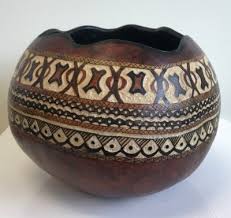
Image from Maui Hands
Ceramic Voyage
Among the ways archeologists trace migration, pottery gives a solid trace due to the clay and minerals being from a certain area. The archeologists can then see patterns in migration as well as a look into clay designs from the spread of culture. This paper discusses the origins of Lapita pottery, the cultural connections, and evidence of Polynesian migration. As an artifact of early Oceanic culture, Lapita pottery offers critical insights into the migration and cultural progress of Oceanic societies, highlighting its role in shaping both historical narratives and modern understandings of lineage.
Lapita pottery first emerged about four thousand years ago when a sea-faring group of people from Southeast Asia (close to Taiwan) landed on a New Caledonia beach. Dr. Jane Horan wrote a section about the history of Lapita pottery in Khan Academy. She says that no one is quite sure why the Lapita people left their place in Southeast Asia and travelled to the islands. “We can only theorize about the political and environmental pressures that drove these people to set out to sea in search of new places to live (Horan).” Shards of this pottery were found on the shores of New Caledonia, and they also had artistic designs. With no evidence of modern tools to create the pottery it can be assumed that they used their hands, wooden tools, plus an open fire to complete the process. Beyond its practical uses Lapita pottery is also a key cultural marker offering insights into the artistic and symbolisms of early Oceanic societies.
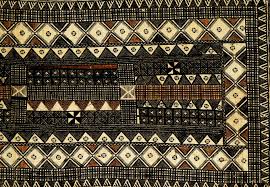
Image from Khan Academy
The cultural connections and symbolism of Lapita pottery is important because the islands have common roots, language, appearance yet there are differences between these when comparing Polynesia, Melanesia, and Micronesia. A documentary Tagata Pasifika Lapita Story 2006 hosted by Aaron Taouma explains the journey of Lapita pottery from Tawain to Vanuatu and through Polynesia. They found three-thousand-year-old bones and were able to extract DNA proving that the bones were not Polynesian. Meaning that there were a separate people who voyaged to the islands. There was definitely some cultural diffusion happening with the introduction of the pottery and perhaps some of the early designs as well. When the pottery was decorated, they used repeated patterns with teeth like instruments and by using sharp tools. Probably shells and bones were used for this purpose. This was mostly only found on early Lapita Pottery. In the documentary Discovering the Mysteries of Polynesia – Nomads of the Wind: Crossroads of the Pacific shows that they still make pottery this way in Fiji. Fiji is also continuing many ancient traditions from three thousand years ago.
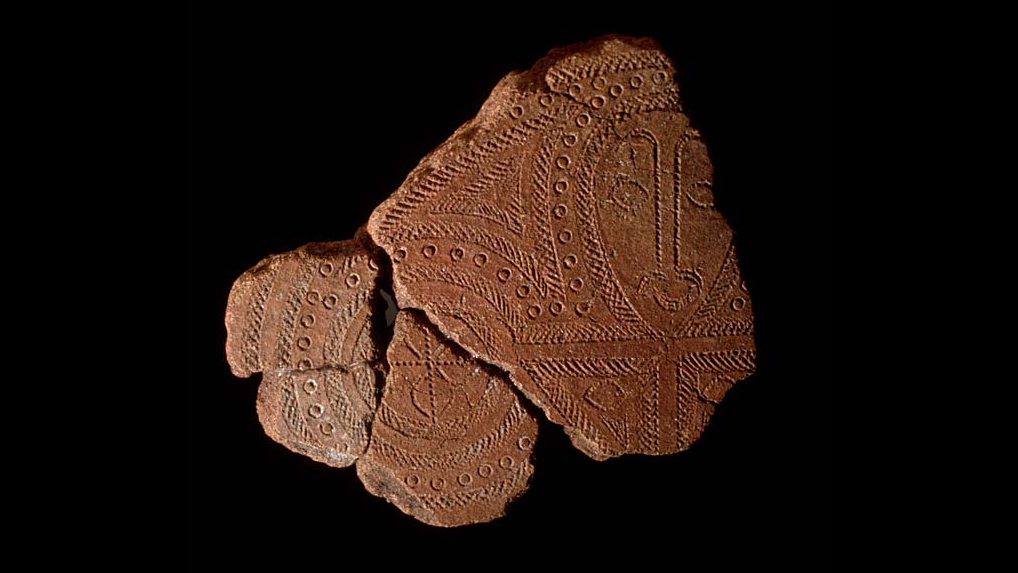
Image from Khan Academy
The evidence of migration can be found through scientific methods such as studying bones, language, appearances, and through pottery. By finding and studying pottery archeologists were able to determine migration patterns from finding Lapita pottery throughout the Pacific islands. proving that the earliest known seafarers made their way to the shores of New Caledonia then onwards to Vanuatu, Fiji, Samoa, Solomon Islands, and so on. This is important to know because you can find the isolated source and the spread of the source making it easier to understand the links, travel, and art between Lapita people’s influence and how Polynesians incorporated pottery.
Studying Lapita pottery pieces together migration and the spread of culture. People can now acknowledge the connection between Polynesia, Melanesia, and Micronesia. Evidence suggests that the pottery was used for serving food and/or for storage. The designs varied between the islands as well as shapes and sizes. Some were flat bottomed and some had a foot. People can now trace their ancestry more easily with DNA testing. But they can certainly see the journey through the path of the pottery and the connections to who they are and where they came from. Lapita pottery remains an essential tool for understanding Oceanic migration and their cultural connections.
Works Cited
Horan, Jane. “Terracotta Fragments, Lapita People.” Khan Academy, Khan Academy, www.khanacademy.org/humanities/art-oceania/oceania-peoples-and-places/lapita-culture/a/terracotta-fragments-lapita. Accessed 24 Feb. 2025.
Taouma, Aaron, director. Tagata Pasifika Lapita Story 2006, 2006, Accessed 24 Feb. 2025.
Willis, Paul. “Discovering the Mysteries of Polynesia – Nomads of the Wind: Crossroads of the Pacific.” YouTube, YouTube, 2011, http://www.youtube.com/watch?v=_H2PQIexbts.
 Magic, Myths, and Me
Leave a comment