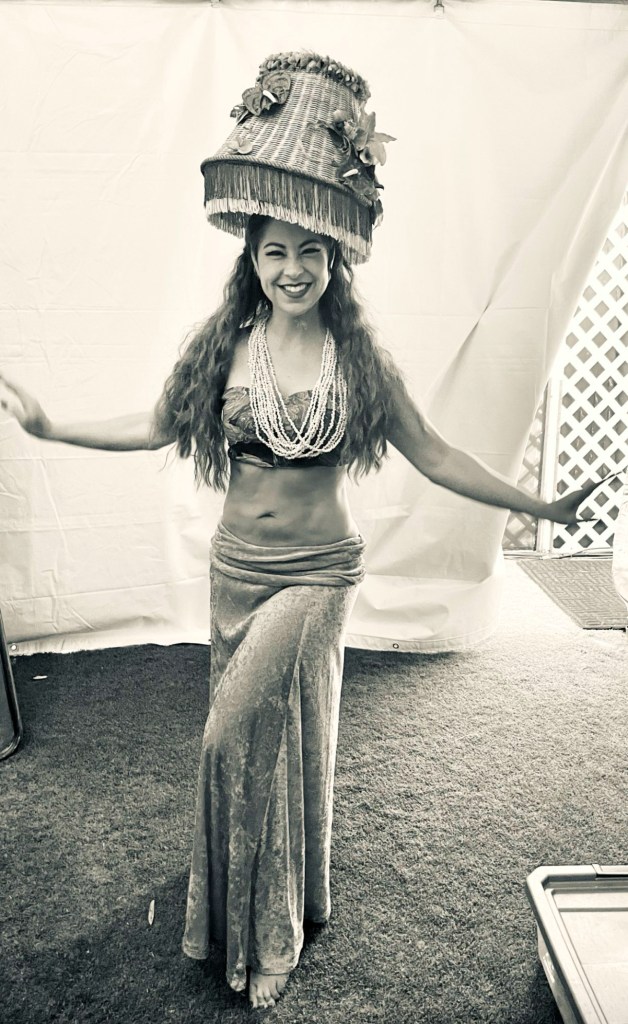
In the picture above I am wearing a lampshade costume. During the 50’s and 60’s lampshade hula girls (not real girls…lol) were mostly put in hotel rooms for the tourists. More recently big companies that have their corporate events in Hawai’i sometimes hire human décor like hula girl lampshades to fulfill their nostalgic themes. Most people that approached me at these events asked what I was dressed as. I simply explained that I was a 1960’s lampshade hula girl. I didn’t mind the gig because I love to dress up in costumes but that doesn’t mean I don’t look at the bigger picture. Even dancing for a luau sometimes makes me think about post-colonialism. What keeps me involved is keeping the culture alive and working along side some of the best Polynesian dancers in the world.
It is no secret that Hawa’i’s Queen Lili’uokalani was overthrown in 1893 by the U.S. for business and military reasons. What was left behind was a nation trying to pick up the pieces and hold onto a culture before it vanished completely. The Hawaiian people held on for dear life as missionaries, businessmen, and American teachers tried to squash their culture to a pulp. Thankfully the people stayed strong and were able to hold onto their language and cultural histories thanks to authors like David Malo. Who also wrote about Hawaiian traditions and history of the genealogies as well.
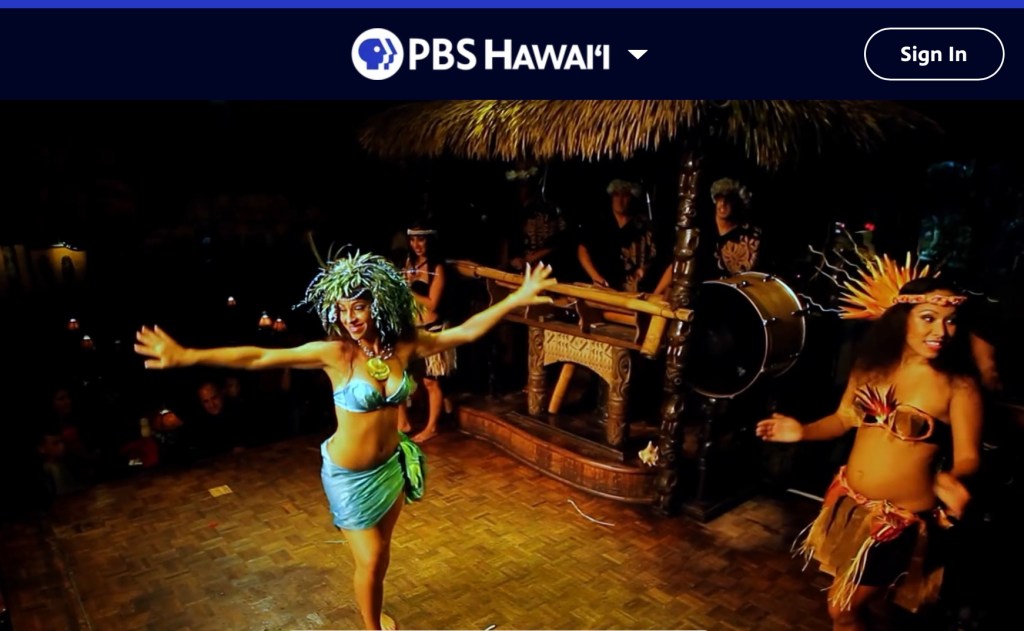
Besides having beautiful weather most of the year, tourists that visit Hawai’i can feel the mana (energy) and feel closer to nature. What they probably don’t know is the dark past that forced a people to give up everything. If you take a look at Hawai’i in the 1950’s and 1960’s (thanks to Hollywood) you’ll see a romanticized island life where everything is easy and tiki’s are a bad omen. Most TV shows back then had at least one Hawai’i episode like The Brady Bunch where the boys had to return a tiki to an ancient burial site. It’s shows like The Brady Bunch, Gilligan’s Island, and Adventures in Paradise that gave a false view of Hawaiian culture that led to ignorance and misrepresentation of a culture. What was born out of this era was the Tiki Culture. Which is still going strong, and you can watch a PBS episode all about it called, “Plastic Paradise.” I was interviewed towards the very end and there are clips of our show throughout.
This is the link – https://www.pbs.org/video/plastic-paradise-tc7dok
I feel inspired to do a story about post-colonialism in Hawai’i. Hopefully to educate visitors more about how it affects the relationships between different perspectives that live on and visit the islands.

 Magic, Myths, and Me
Leave a comment